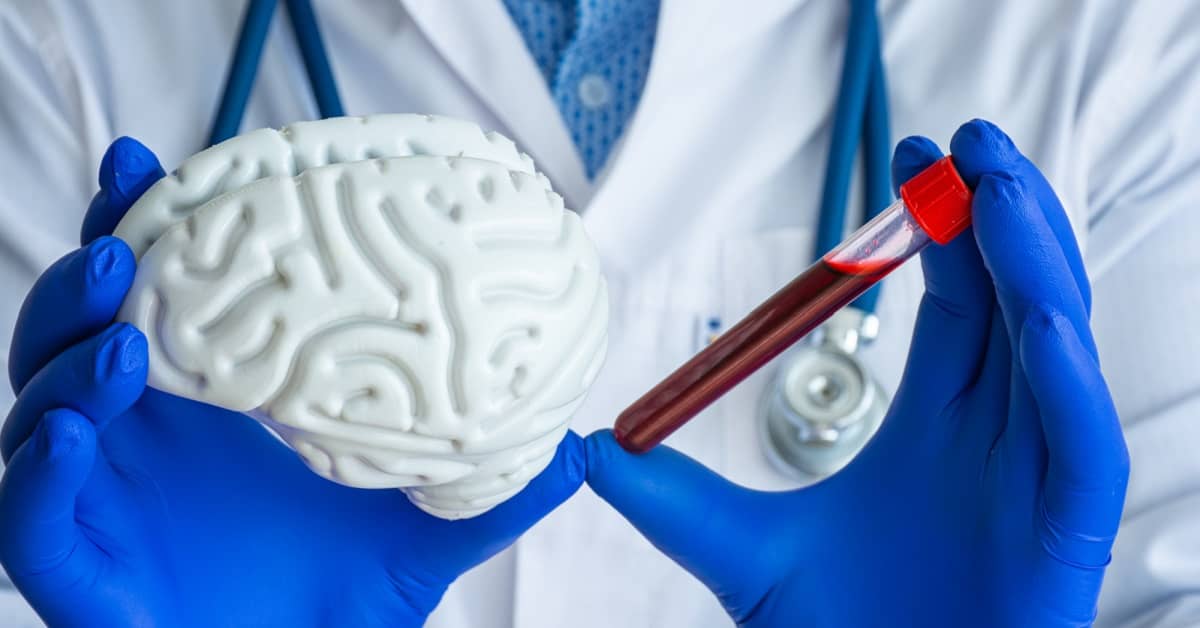
A Simple Blood Test Could Now Detect Alzheimer's Before Memory Loss Begins
What if a simple blood test could reveal what’s happening deep inside the brain… years before symptoms begin? Scientists say that moment may have finally arrived—and it could change everything we thought we knew about aging and memory.
Key Takeaways
Blood tests are now a reality – FDA-cleared tests can detect Alzheimer’s-related changes with high accuracy.
Better biomarkers lead the way – p-tau and amyloid ratios are more reliable than earlier experimental markers.
Early detection changes everything – It creates a critical window for lifestyle and treatment interventions.
This Simple Test Could Change the Future of Brain Health
For years, conventional medicine has poured enormous resources into understanding Alzheimer's disease — hunting for drugs to treat it, and for ways to detect it earlier, before the disease quietly dismantles memory and cognition piece by piece.
For a long time, the honest answer was: there was no reliable physical test. The only way to know if Alzheimer's was developing was through memory and cognition assessments — subjective measures that only flagged a problem after the disease had already taken hold.
That's changing. And the pace of change in recent years has been remarkable.
The Early Promise: A Gene Protein Signal in the Blood
The story of Alzheimer's blood testing gained momentum with research out of the University of California San Diego, which pointed to a compelling early clue.
Scientists observed that higher blood levels of extracellular RNA — RNA that "escapes" the cell and circulates in the bloodstream — produced by a gene called PHGDH, appeared to predict who would later show Alzheimer's pathology at autopsy. The PHGDH gene is critical for brain development early in life, but its activity normally drops off significantly as we age. When it starts producing elevated levels of this extracellular RNA in older adults, something may be going wrong.
The research was based on a 14-year study of adults aged 70 and older, whose blood was tested periodically beginning in 2000. When participants passed away, their medical records and brain autopsies were reviewed — and those elevated RNA levels in life appeared to correlate with Alzheimer's pathology at death.
As researcher Edward Koo noted carefully at the time, the findings needed replication and expansion, and further confirmation would take ten years or more.
That caution was well-placed. The PHGDH exRNA signal remains scientifically interesting and continues to be explored — but it has not become a clinical test. The field has moved fast, and it has moved in a different direction.
A Major Leap: The First FDA-Cleared Blood Tests for Alzheimer's
Here's the headline that would have seemed almost unimaginable just a few years ago:
Blood tests for Alzheimer's disease now exist — and they've been cleared by the FDA.
In 2025, the FDA cleared the Lumipulse G pTau217/β-amyloid 1-42 plasma ratio test as an in-vitro diagnostic device to help diagnose Alzheimer's disease in adults showing symptoms, by detecting changes related to amyloid plaque buildup in the brain.
Separately, Roche's Elecsys pTau181 plasma assay received FDA clearance as the first blood-based biomarker test specifically designed for primary-care use — allowing doctors to rule out Alzheimer's-related amyloid pathology without sending patients for expensive PET scans or invasive spinal taps.
Academic medical centers like UC Davis Health are now offering an FDA-approved blood test capable of ruling out Alzheimer's with approximately 96% accuracy in people experiencing mild cognitive issues. A positive result can support an earlier diagnosis — and critically, earlier access to disease-modifying treatments.
This is a genuine turning point. The field has shifted from "no physical test" to regulated blood diagnostics that can meaningfully reduce the burden of diagnosis for many symptomatic patients.
What These Tests Are Actually Measuring
The current generation of clinical blood tests is focused on two primary targets:
Phosphorylated tau proteins — particularly p-tau217 and p-tau181 — which correlate strongly with amyloid and tau changes visible on PET imaging and in spinal fluid analysis.
Amyloid-β 42/40 ratios — often combined with p-tau markers in diagnostic algorithms to improve accuracy.
These protein-based markers have proven more clinically robust than earlier single-marker approaches like PHGDH exRNA for predicting or confirming Alzheimer's-type pathology — which is why they've moved ahead to FDA clearance first.
Research from UC San Diego continues to advance as well, with newer work examining broader panels of blood markers tied to early cognitive changes in diverse populations, including Hispanic and Latino adults. Multi-marker blood panels show real promise for capturing subtle cognitive shifts — though these remain research tools for now, not routine clinical tests.
What This Means for You
Pharmaceutical companies are excited about these tests for a specific reason: they believe earlier detection could help them run trials of drugs that have repeatedly failed in late-stage Alzheimer's patients — when neurons are already dying. The hypothesis is that some of those failed drugs might actually work if given earlier, before irreversible damage occurs.
From a natural health perspective, though, the opportunity is even more significant.
Early detection isn't just about drugs. It's about motivation.
When people find out early — before obvious symptoms emerge — they have a genuine window to act. And the lifestyle measures that support brain health are not small things. Better nutrition, regular exercise, sleep quality, stress reduction, and targeted nutritional support have all shown real promise in supporting cognitive health and slowing decline.
A blood test that gives people a 10- or 15-year head start on protecting their brain is a powerful tool — if people use that window wisely.
The science of early detection is finally catching up. The question is what you do with that information.
We'll continue to track developments in this rapidly evolving field and keep you informed as new research emerges.
Summary
Alzheimer’s detection is undergoing a major shift, moving from subjective memory testing to objective blood-based diagnostics. Early research identified potential signals like PHGDH extracellular RNA, but newer advances have led to FDA-cleared blood tests measuring biomarkers such as phosphorylated tau and amyloid-beta ratios. These tests can help diagnose or rule out Alzheimer’s with high accuracy in symptomatic individuals. The real breakthrough lies in early detection, which may allow earlier intervention—both medically and through lifestyle strategies—to support long-term brain health.
Frequently Asked Questions
Can a blood test really detect Alzheimer’s?
Yes, new FDA-cleared blood tests can detect biomarkers associated with Alzheimer’s pathology in symptomatic individuals.
What biomarkers do these tests measure?
They primarily measure phosphorylated tau proteins (p-tau217, p-tau181) and amyloid-beta ratios.
Are these tests used for early detection?
Currently, they are mainly used for people with symptoms, but research is advancing toward earlier detection.
How accurate are these tests?
Some tests can rule out Alzheimer’s with about 96% accuracy in certain populations.
Why is early detection important?
It allows for earlier treatment and lifestyle changes that may help slow cognitive decline.
Yan Q, et al. “Presymptomatic Increase of an Extracellular RNA in Blood Plasma Associates with the Development of Alzheimer’s Disease.” Journal of Alzheimer’s Disease, 2020
U.S. Food and Drug Administration. FDA Clears First Blood Test Used in Diagnosing Alzheimer’s Disease. Published May 15, 2025. Accessed April 23, 2026. https://www.fda.gov/news-events/press-announcements/fda-clears-first-blood-test-used-diagnosing-alzheimers-disease
Mayo Clinic Staff. New FDA-approved blood tests for diagnosing Alzheimer’s disease. Mayo Clinic. Published July 7, 2025. Accessed April 23, 2026. https://www.mayoclinic.org/diseases-conditions/alzheimers-disease/in-depth/new-blood-tests-alzheimers/art-20585060
Alzheimer’s Association. Alzheimer’s Association welcomes FDA clearance of blood test for primary care to rule out Alzheimer ’s-related amyloid pathology. Published October 13, 2025. Accessed April 23, 2026. https://www.alz.org/news/2025/fda-clearance-blood-test-primary-care-rule-out-alzheimers-related-amyloid-pathology