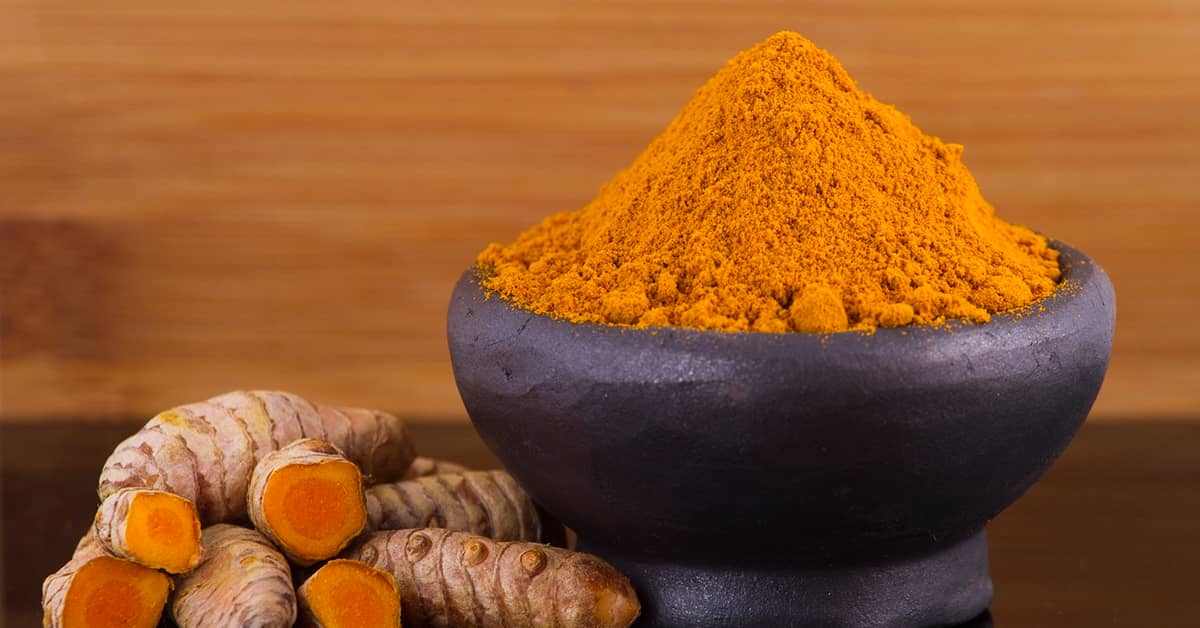
You've probably heard that turmeric is good for your joints. But what if one of its most powerful benefits has nothing to do with joint pain? Scientists have spent years investigating whether a compound found in this golden spice could help support memory and protect the aging brain.
Early results were disappointing—until researchers solved one major problem that had been holding turmeric back all along. Now, newer forms of curcumin are producing findings that have scientists taking another look at one of nature's oldest remedies.
Key Takeaways
Absorption matters. Highly bioavailable forms of curcumin have shown greater promise for supporting memory and cognitive function than standard curcumin supplements.
Human studies are encouraging. Clinical trials have reported improvements in memory, attention, and mood in older adults taking enhanced curcumin formulations.
Research is still evolving. Curcumin can help support healthy brain aging, but it has not been proven to prevent Alzheimer's disease.
Researchers Took a Second Look at Turmeric—and Found Something Surprising
Turmeric has been used for centuries in traditional cooking and wellness practices. Today, much of the scientific interest centers on curcumin, the natural compound thought to be responsible for many of turmeric's antioxidant and anti-inflammatory properties, which promote joint comfort and health.
Curcumin has attracted attention for another reason as well. In laboratory and animal studies, it appears to influence several biological processes associated with healthy brain aging, including inflammation, oxidative stress, and the abnormal protein changes linked with memory loss. While these findings are intriguing, scientists caution that results from laboratory studies don't always translate directly to humans.
One of the biggest challenges has always been absorption. Standard curcumin is poorly absorbed by the body and rapidly broken down, leading many researchers to wonder whether enough of it ever reaches the brain to make a meaningful difference.
To address this problem, scientists developed several highly bioavailable forms of curcumin designed to improve absorption.
Early Study Finds Improvements in Memory, Attention, and Mood
In 2015, researchers at Swinburne University of Technology in Australia conducted one of the first randomized, double-blind, placebo-controlled trials evaluating a highly bioavailable form of curcumin.
The study enrolled 60 healthy adults between the ages of 60 and 85 who received either highly bioavailable curcumin or a placebo.
Researchers evaluated participants shortly after their first dose and again after four weeks of daily supplementation.
Compared with those receiving the placebo, participants taking curcumin performed better on several measures of cognitive function, including memory, attention, alertness, and fatigue. They also reported improvements in mood, feeling calmer and more content.
Interestingly, some improvements were observed within an hour after taking a single dose—an uncommon finding in nutrition research, where benefits often require weeks or months to appear.
Lead investigator Dr. Andrew Scholey noted that curcumin appears to influence multiple biological pathways involved in brain health, including inflammation and blood flow, which may help explain these findings.
While the study was relatively small and short in duration, it provided early evidence that improving curcumin absorption might enhance its effects on cognitive performance.
Longer Study Explores Memory and Brain Changes
A second randomized, placebo-controlled study, conducted at UCLA and published in the American Journal of Geriatric Psychiatry in 2018, examined whether a different highly bioavailable curcumin formulation could support cognitive health over a longer period.
The study included 40 adults between the ages of 51 and 84 who did not have dementia but reported mild age-related memory concerns.
Participants took either highly bioavailable curcumin or a placebo daily for 18 months.
Over the course of the study, those taking curcumin demonstrated significant improvements on several standardized memory tests compared with their own baseline performance, while the placebo group showed no similar improvement. Participants taking curcumin also performed better on measures of attention and experienced modest improvements in mood.
Thirty participants also underwent PET brain imaging. Researchers observed lower levels of amyloid and tau signal in certain brain regions among those taking curcumin compared with the placebo group. These findings are intriguing because amyloid and tau are proteins associated with memory loss.
However, it's important to understand what these results do—and do not—show.
The study was not designed to determine whether curcumin prevents memory loss or slows its progression. Rather, it demonstrated changes in imaging markers that researchers believe deserve further investigation.
Lead author Dr. Gary Small emphasized that the exact mechanism remains uncertain, but suggested curcumin's anti-inflammatory and antioxidant effects may play an important role.
Why Absorption Matters
The encouraging findings from these studies may have less to do with curcumin itself than with how well it is absorbed.
Traditional curcumin supplements are known to have poor bioavailability, meaning only a small amount enters the bloodstream after consumption.
The formulations used in these studies were specifically engineered to improve absorption using a suspension or a lipid-based coating.
These specialized formulations differ substantially from standard turmeric powders or conventional curcumin supplements, making it difficult to assume just any old curcumin will produce identical results.
What We've Learned Since These Studies
Since these landmark trials were published, researchers have reviewed the broader body of evidence to better understand curcumin's effects on cognition.
Overall, the findings remain encouraging.
Several recent systematic reviews and meta-analyses report that highly bioavailable curcumin formulations may support aspects of cognitive function such as working memory, attention, and processing speed, particularly in older adults and when taken consistently for six months or longer.
However, not every study has found significant benefits.
Researchers believe differences in dosage, study design, participant health, treatment duration, and the type of curcumin used likely explain much of the variation in results.
Importantly, no high-quality clinical trial has demonstrated that curcumin prevents or treats Alzheimer's disease.
Instead, the current evidence suggests that highly bioavailable curcumin formulations may help support healthy brain aging and cognitive performance in some adults, while larger clinical trials continue to investigate their long-term potential.
Summary
Turmeric's active compound, curcumin, has long been recognized for its antioxidant and anti-inflammatory properties, but researchers have also explored its potential to support healthy brain aging. The challenge has always been poor absorption, limiting how much curcumin reaches the bloodstream and brain. Newer, highly bioavailable forms have changed that equation.
Clinical studies have found that these enhanced formulations may improve memory, attention, processing speed, and mood in older adults. One long-term UCLA study even observed reduced amyloid and tau signals on brain imaging among participants taking curcumin.
More recent reviews suggest that highly absorbable curcumin may support cognitive health, particularly when taken consistently for several months. While larger studies are still needed, the evidence continues to suggest that choosing the right form of curcumin may make all the difference.
Frequently Asked Questions
Why doesn't regular curcumin work well?
Curcumin is naturally difficult for the body to absorb. Enhanced formulations were designed to improve absorption, allowing more curcumin to circulate in the body.
Can curcumin improve memory?
Several clinical studies suggest that highly absorbable forms of curcumin may support memory, attention, and processing speed in some older adults, although results vary between studies.
Does curcumin treat Alzheimer's disease?
No. Current research does not show that curcumin treats Alzheimer's disease. Studies suggest it supports healthy brain aging, but larger clinical trials are needed.
How long does it take to see benefits?
Some studies reported short-term improvements in attention, while others found the greatest cognitive benefits after several months of consistent supplementation.
Are all curcumin supplements the same?
No. Many experts believe the formulation matters. Most positive human studies have used specialized, highly bioavailable forms rather than conventional curcumin powder.
References:
Cox KHM, Pipingas A, Scholey AB. Investigation of the effects of solid lipid curcumin on cognition and mood in a healthy older population. Journal of Psychopharmacology. 2015.
Lopresti AL. Curcumin for cognitive function: systematic review of randomized controlled trials. Nutrients. 2024.
Recent systematic review and meta-analysis of curcumin supplementation and cognition. 2025.
https://www.ncbi.nlm.nih.gov/pubmed/25277322
https://www.sciencealert.com/turmeric-can-improve-memory-and-attention-span-in-old-age-study-finds
http://www.ajgponline.org/article/S1064-7481(17)30511-0/fulltext
https://www.sciencedaily.com/releases/2018/01/180123101908.htm