What if your brain were quietly sending invisible signals that shape everything from how well you remember a name to how much pain you feel?
Scientists are making remarkable discoveries about brainwaves and how they can boost your memory and even reduce physical pain. And researchers believe we’re only beginning to understand their true potential.
Key Takeaways
Theta brainwaves support learning and memory, and increasing theta activity may improve memory performance.
Brainwave entrainment devices using sound and light have shown promise in boosting memory-related brain activity.
Human touch can synchronize brainwaves, helping reduce pain and strengthening emotional connection.
Your Brain Sends Invisible Waves—And They May Change Everything
I’m sure that if you’ve watched a sporting event on TV or gone to a game, you’ve seen the fans in the stands do “the wave”, standing up and sitting down in a coordinated way that sends a wave around the ballpark.
Well, scientists studying the brain say that its neurons send electrical signals and information from cell-to-cell in a similar way, firing off in waves that travel through the brain.
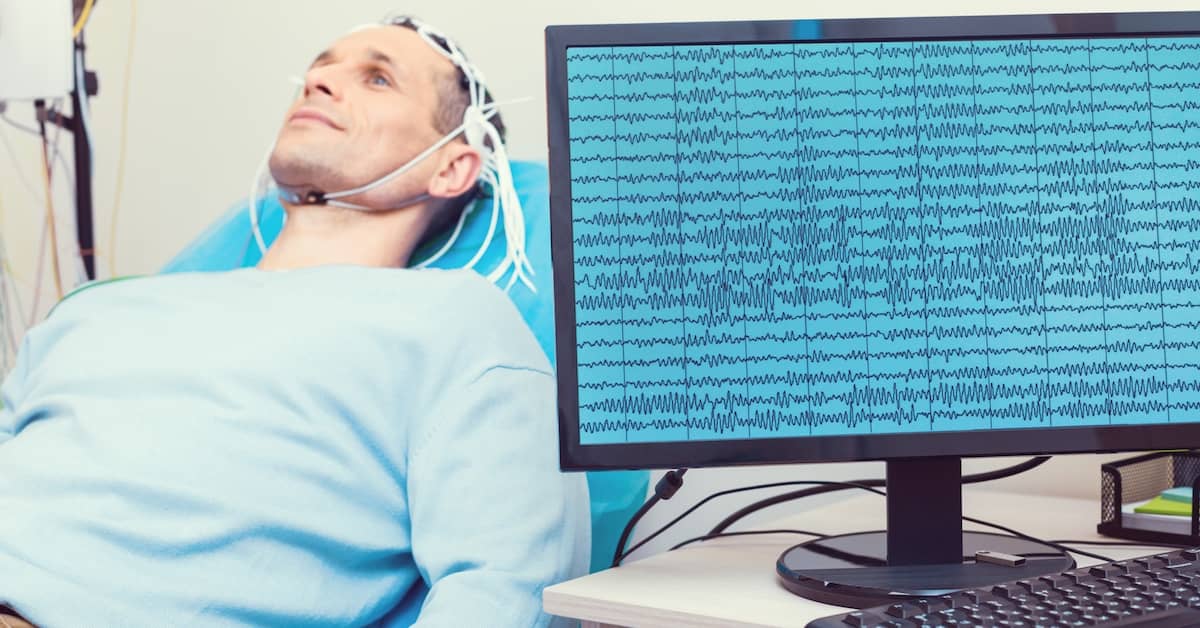
These signal-carrying waves are called brainwaves. They’re measured and analyzed with an EEG, or electroencephalography, a test most of us have probably had in a doctor’s office at one time or another. It’s a non-invasive procedure to analyze the brain’s electrical activity. There is a lot about brainwaves that nobody understands, but as time goes by, researchers are uncovering some remarkable ways to harness brainwaves to improve your overall health.
Theta Waves: Your Brain's Memory Booster
Theta waves are brainwaves that pulse about five or six cycles per second. Researchers at the University of California-Davis, who have been studying them, say waves of this type are linked to brain activity that keeps track of what you’re doing, such as finding your way through a maze or driving a particular route home. The researchers have also found that high levels of theta waves in the brain right before you try to memorize something are connected to better learning.
Newer studies have strengthened the connection between theta waves and memory formation. Researchers now believe these rhythmic electrical pulses help coordinate communication between different regions of the brain as memories are created, stored, and retrieved. Some scientists are even investigating whether carefully timed stimulation of theta waves could someday help improve learning and memory performance.
Will an "Entrainment" Device Help?
To test whether so-called “entrainment” devices, which are available for purchase, can boost theta-wave activity and improve memory, the scientists analyzed their effects in a series of experiments.
What's an entrainment device? A device that uses rhythmic sensory stimulation, usually sound, light, or both, to stimulate theta brain waves. In this trial, the participants used the machines for 36 minutes before being tested on their memory. And the device worked – theta waves were enhanced, and memory improved.
"What's surprising is that the device had a lasting effect on theta activity and memory performance for over half an hour after it was switched off," says researcher Charan Raganath. Besides that, when the brainwave machines were used in the mode intended to enhance beta wave activity, a different type of brainwave that occurs at 12 to 30 cycles per second, the devices still increased theta wave activity and memory.1
In 2026 researchers are investigating theta entrainment not just for memory, but also for:
Cognitive enhancement
Emotional well-being
Learning retention
Recovery from neurological disorders
Chronic pain management
That doesn't mean every commercial brainwave device works as advertised, but the underlying concept of influencing neural oscillations is receiving much more scientific attention.
Memory and Gamma Waves
Perhaps most intriguing of all is emerging research on a different type of brainwave called gamma waves.
These faster brainwaves are associated with attention, perception, and higher cognitive function. In laboratory studies, scientists found that exposing animals to light and sound pulses synchronized at a specific gamma-wave frequency appeared to reduce harmful protein buildup in the brain, lower inflammation, and improve memory performance.
While researchers caution that much more work is needed to determine whether these findings apply to humans, the results have generated tremendous excitement among neuroscientists studying healthy brain aging.
But brainwaves aren't just a boon to thinking and memory. They can help reduce pain, too.
Manipulate Your Brainwaves to Reduce Pain
In the right circumstances, you can use brainwaves to reduce pain. Research at the University of Colorado and the University of Haifa in Israel shows that if you sympathize with someone who’s in pain and hold their hand, your breathing and heart rate will synchronize with theirs, and when your brainwaves go into sync, their pain lessens.2
And the more you empathize with their suffering, the more your brainwaves coordinate and the greater their pain drops. But it works only if you hold their hand. "We have developed a lot of ways to communicate in the modern world and we have fewer physical interactions," says researcher Pavel Goldstein. “[Our study] illustrates the power and importance of human touch."
The study focused on 22 heterosexual couples who had been together for a year or more. In each test, the female half of the couple was subjected to mild heat pain. The analysis showed that “interpersonal synchronization” of brainwaves took place in what is called the alpha mu band, a wavelength associated with focused attention.
But if the couple didn’t hold hands, the synchronization was weaker, and the pain did not diminish. The researchers in this study don’t understand how brainwaves between people become synchronized. But other studies show that even during everyday conversations, our brainwaves may go into sync with another person’s to some degree.3
Studies have shown that this phenomenon known as inter-brain synchrony can occur:
During conversations
During cooperative tasks
Between musicians
Between teachers and students
Between romantic partners
Even during some forms of remote communication
The years to come will likely bring more fascinating discoveries about different kinds of brainwaves.
Brainwaves and the Future of Brain Health
As fascinating as these discoveries are, researchers believe they're only scratching the surface of what brainwaves can tell us about the human mind. In recent years, scientists have uncovered evidence suggesting that specific brainwave patterns may play an even greater role in memory, learning, attention, and healthy aging than previously thought.
Taken together, these discoveries suggest that brainwaves are far more than simple electrical activity. They may represent one of the brain's most important communication systems—a system that influences how we learn, remember, connect with others, and potentially maintain cognitive health as we grow older. As scientists continue to unlock their secrets, brainwaves may provide some of the most exciting breakthroughs in neuroscience for years to come.
Summary
Brainwaves are electrical signals that travel through the brain, carrying information between neurons much like a wave moving through a stadium crowd. Researchers have discovered that specific types of brainwaves, particularly theta waves, play an important role in learning and memory. In one study, brainwave entrainment devices using sound and light increased theta wave activity and improved memory performance, with benefits lasting even after the device was turned off. Scientists have also found that brainwaves may synchronize between people. Research involving couples showed that holding hands while one partner experienced pain caused their breathing, heart rates, and brainwaves to align, reducing the sensation of pain. These fascinating findings suggest brainwaves may influence memory, empathy, learning, and human connection in ways we are only beginning to understand.
Frequently Asked Questions
What are brainwaves?
Brainwaves are electrical signals generated by neurons communicating throughout the brain. They can be measured using an EEG.
What are theta waves?
Theta waves are slow brainwaves associated with memory formation, navigation, learning, creativity, and certain states of focus.
Can brainwave entrainment improve memory?
Research suggests that devices using sound and light stimulation may increase theta wave activity and temporarily enhance memory performance.
How can brainwaves reduce pain?
Studies show that when people physically connect through touch, their brainwaves can synchronize, which may help reduce perceived pain.
Are scientists fully aware of how brainwaves work?
No. While researchers understand some functions of brainwaves, many aspects of how they influence cognition, emotions, and human connection remain mysterious.